|
|

|
BREAKING THE CODE –
The DA Vinci Code
Pastor David L. Brown, Ph.D. © June 2006 by David L. Brown, Ph.D.
The DA Vinci Code is the wildly popular fiction novel by Dan Brown. To date, the book has sold 43 million copies and has been translated into 40 different languages. The movie, based on the book has proven to be a blockbuster as well.
The book opens with the discovery of a murdered Louvre curator, who is found naked with a five-pointed star, a pentagram, carved on his stomach. For those of you who are unfamiliar with the plot of this novel we offer you the following summary which is found on the flyleaf of the book – While in Paris on business, Harvard symbologist Robert Langdon receives an urgent late-night phone call. The elderly curator of the Louvre has been murdered inside the museum, a baffling cipher found near the body. As Langdon and a gifted French cryptologist, Sophie Neveu, sort through the bizarre riddles, they are stunned to discover a trail of clues hidden in the works of Da Vinci – clues visible for all to see and yet ingeniously disguised by the painter. The stakes are raised when Langdon uncovers a startling link: The late curator was involved in the Priory of Sion – an actual secret society whose members included Sir Isaac Newton, Botticelli, Victor Hugo, and Da Vinci, among others. Langdon suspects they are on a hunt for a breathtaking historical secret, one that has proven through the centuries to be as enlightening as it is dangerous. In a frantic race through Paris, and beyond, Langdon and Neveu find themselves matching wits with a faceless powerbroker who appears to anticipate their every move. Unless they can decipher the labyrinthine puzzle, the Priory’s secret – and an explosive ancient truth – will be lost forever. As you read, The Da Vinci Code weaves a tangled conspiracy web and most everybody loves a conspiracy. The book that is neck deep in murder, intrigue, mystery, hidden treasure, clandestine secrets, sensual rituals, secret codes and more. However, Dan Brown, the author, has another agenda and that is to attack Jesus Christ, the Church, Christianity, and those, like myself, who identify themselves as Christians. But, why should we even be worried about this book? First, author Dan Brown was recently named as one of the World’s 100 Most Influential People by Time Magazine. The Da Vinci Code book and movie is influencing people. Here are some of the assertions made in the book –
Is the book fact or fiction? To be sure, it is catalogued as a fiction work, but as Timothy P. Jones says, "If the book’s claims were only treated as fictional, there probably wouldn’t be so much interest. However, the author of The Da Vinci Code doesn’t view his work as pure fiction." (Answers to The DA Vinci Code; Rose Publishing; p.1). Is Jones correct in his evaluation? Yes, I think he is and here’s why. On page 1 of The DA Vinci Code we read these words – F A C T : The Priory of Sion – a European secret society founded in 1099—is a real organization. In 1975 Paris’s Bibliothèque Nationale Discovered parchments known as Les Dossiers Secrets, identifying numerous Members of the Priory of Sion, including Sir Isaac Newton, Boticelli, Victor Hugo, And Leonardo da Vinci… All descriptions of artwork, architecture, documents, and secret rituals in this novel are accurate. (Hard back edition of The Da Vinci Code; by Dan Brown; p.1) The author, Dan Brown, would have you believe his fiction novel, The Da Vinci Code, is actually based on facts. He has purposely gone about to blur the lines between fact and fiction. Consider his interview with Matt Lauer, on The Today Show, June 9, 2003. Matt asked Dan Brown, "How much of this book is this based on reality in terms of things that actually occurred?" Dan Brown answered, "Absolutely all of it. Obviously, Robert Langdon is fictional, but all of the art, architecture, secret rituals, secret societies—all of this is fact." The New York Daily News said of his book The Da Vinci Code, "His research is impeccable." (http://www.danbrown.com). In light of the "FACT" declaration on the opening page, and the author’s very public assertions that the book is "Absolutely" based on fact, many people believe the book and movie are based on facts. However, I contend that The Da Vinci Code is a cunningly devised fable. Before we expose the more significant deceitful fabrications of the book I want to… ˜ Expose A Few of the Inaccuracies In the Descriptions of the Alleged "Accurate" Artwork & Architecture" In the Book The book says that the Louvre’s Glass Pyramid (designed by MIT & Harvard educated Ieoh Ming Pei and added to the entrance of the Louvre Museum in 1989) was "at President Mitterand’s explicit demand, [and] had been constructed of exactly 666 panes of glass…." (Hard back edition of The Da Vinci Code; by Dan Brown; p.21; hereafter D.C.) However, on a recent visit to the Louvre, I discovered that their own count is 673 panes of glass NOT exactly 666 panes of glass as the book says! Next we come to the painting the book identifies as Madonna of the Rocks (DC p.134). The actual name of this Da Vinci painting is Virgin of The Rocks. The book says it hangs in a side room of the Louvre called the Salle des Etats (DC p. 131). In fact, it actually hangs in the Grand Gallery Hallway! Again, in the book we see that Sophie Neveu is looking at the painting described as 5 feet tall. Let me accurately describe the painting for you. It is much larger than that - 6 feet 5 inches tall. It is in a massive wooden frame behind glass. It is estimated the painting weight at least 200 pounds. That is something you should note because on page 133 of The Da Vinci Code, Sophie lifts it off the wall. She must have been quite some muscle-bound babe to lift a 200 pound painting off the wall. One final example of the inaccuracies in art come in the book’s description of Da Vinci’s The Last Supper. Leigh Teabing refers to the painting as a fresco on page 243-244. That is most definitely an error on the author’s part. If the painting had been a fresco, it would have lasted through the years and would have been clearly visible. The painting was a tempera painting and not a fresco! It was something Da Vinci was experimenting with. Tempra was a mixture of egg yolk and vinegar mixed with oil and then painted on dry plaster. The experiment was a disaster! The painting was completed in 1497-99. By 1568 painter-architect Giorgio Vassar said the painting was "so badly preserved that one can only see a muddle of blots." By 1642, when Dr. Francesco Scannelli went to see the painting he reported "that it was in such a blurred state that it was difficult to make out the well known subject of the picture." What is the difference between a fresco and a tempera painting? Here is how a fresco is made. When the plaster is wet, paint is put on the wet plaster which intermingles with the plaster. When the plaster dries the color is permanent. The problem with a fresco: only a limited number of colors can be used, the painting cannot be retouched and when the plaster dries you have a permanent, unchangeable painting. Then, there is the tempera. Leonardo wanted to experiment with a new style he had invented - tempera (egg yolk and vinegar) plus oil painting ON dry plaster. That way he could use more colors and redo portions if necessary. This new style of painting turned out to be a disaster. One artist described it this way – "The paint almost immediately began falling off the plaster. The humidity was causing the paint to separate from the plaster on which it had been painted. Whole pieces of paint fell off the wall. Over the years, the piece has been vandalized and nearly fell apart completely." Upon close examination, the "FACTS" of the Da Vinci Code crumble! Let’s look at some of the more important facts.
The cornerstone of the entire story is a secret society called The Priory of Sion. The book claims that it was established in 1099 AD. The book gets its name from Brown’s claim that Leonardo Da Vinci was one of the Grand Masters of The Priory of Sion. The objective of this clandestine organization was to protect the "truth" that Jesus and Mary Magdalene were married and had a child together. To aviod the wrath of the Roman Catholic Church The Priory would hide their secret in paintings, encrypted writings and architecture. But, there is a BIG PROBLEM! There was no secret society called The Priory of Sion founded in 1099 AD. There was a medieval order of monks called The Order of Sion. Here is what Answers.com says about this order –
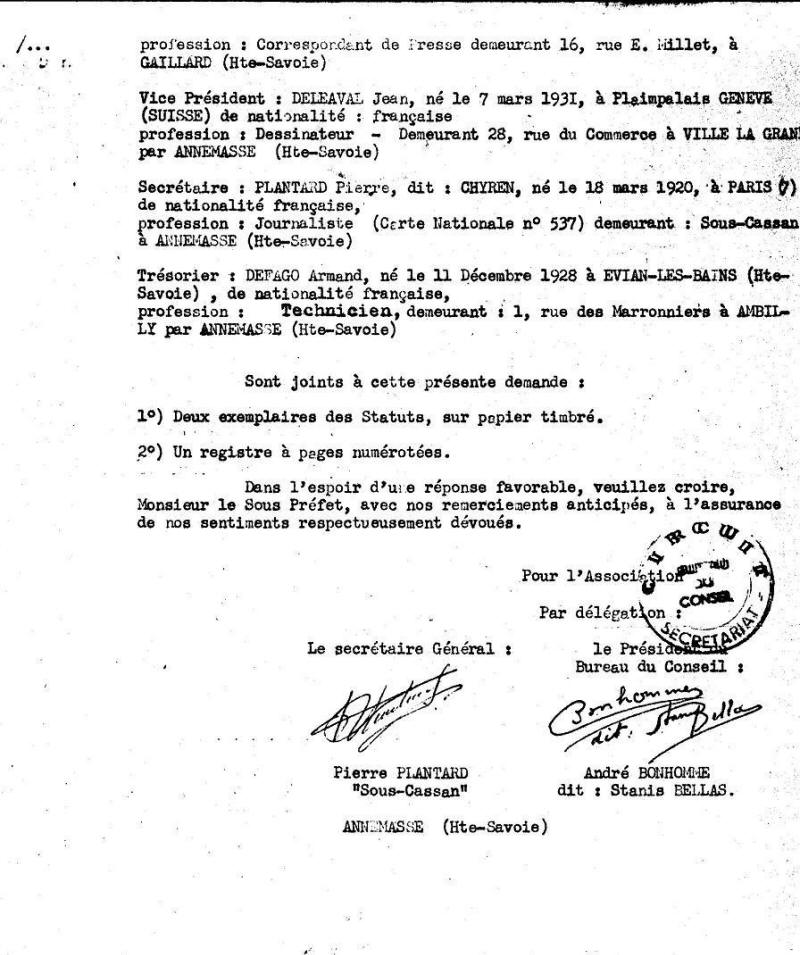
In my research, here is what I have uncovered. Historically, the Priory of Sion was founded in 1956 not 1099. Paul Smith records this --
(the perceeding documents are from -- http://priory-of-sion.com/psp/posd/regdoc.html)
Then there is information from the BBC 2 Timewatch documentary The History of a Mystery (1996): "There's no evidence for a Priory of Sion until the 1950s; to find it, you go to the little town of St-Julien. Under French Law every new club or association must register itself with the Authorities, and that's why there's a dossier here showing that a Priory of Sion filed the proper forms in 1956. According to a founding member, this eccentric association took its name not from Jerusalem, but from a nearby mountain (Col du Mont Sion Alt. 786 m). The dossier also notes that the Priory's self-styled Grand Master Pierre Plantard, who is central to this story, has done time in jail." You should know about the character of Pierre Plantard. He "was a lifelong charlatan and confidence trickster – his 1937-1954 activities involving confidence trickery, anti-semitic and anti-masonic activities are provided in File Ga P7 which is available for public inspection at the Paris Prefecture of Police, 9 Boulevard du Palais, 75195 Paris (Monsieur Claude Charlot, is the Director of Museum Archives of the Bureau of Associations at the Paris Prefecture of Police, for written enquiries)." (http://priory-of-sion.com). Indeed French anti-Semite, and jail bird, Pierre Plantard had a "great imagination" and got himself into trouble with it. He spent six months jail in 1953 for fraud and embezzlement or as the official record reads, a ‘breach of trust.’ The Priory of Sion disbanded sometime after August 1956 when Plantard served another time in prison between December 1956 and December 1957 over allegations relating to "corruption of minors." But Plantard held on to the name The Priory of Sion. Throughout the 1960s and 1970s, Plantard put together a number of bogus documents which "proved" the Jesus–Mary Magdalene theory, with French royalty being their descendants. Plantard claimed that he himself was one of the descendents of Jesus and Mary Magdalene. These bogus documents, alleged to be ancient parchments were called Les Dossiers Secrets. These documents are nothing but a forgery penned in the 1960s and secretly deposited in the Paris Library. While under oath, the judge asked Plantard about these documents about Jesus and Mary Magdalene, and he admitted he made the whole thing up. An associate of Plantard's conceded that Plantard made the whole thing up. All this has been thoroughly documented by several French books and a BBC special. My point is simply this. The The Priory of Sion, which is the cornerstone of Brown’s book, is a hoax! The Jesus – Mary Magdalene theory that is the premise of the whole book is a HOAX. It is FALSE, BOGUS, and PHONY. (For more specifics get the book Cracking The Da Vinci’s Code by Garlow and Jones published by Cook Communications). Now, just in case you do not believe me, consider what Glenn Whipp of the Los Angeles Daily News writes, "The experts say: The Priory, a repository of all manner of conspiracy theories, was a hoax created in 1956 by French anti-Semite Pierre Plantard." (quote from The ChronicleHerald.ca, May 17, 2006; Halfax, Nova Scotia). Upon breaking the code we see, despite Brown’s claim, The Priory of Sion, was not a real organization founded in 1099 AD. Neither was it formed to guard the Jesus-Mary Magdalene marriage theory. It was a very small organization of friends founded in 1956 to lobby for low cost housing.
On page 244 and again on page 245 of The Da Vinci Code we read, "the marriage of Jesus and Mary Magdalene is a part of the historical record." Let’s consider what the New Testament has to say about Jesus being married…………………………………! There is a deafening silence on the subject. The New Testament mentions absolutely nothing. Certainly Paul would have cited the marriage of Jesus as his number one illustration, if it were so, when he defends the right of Apostles to be married in 1 Corinthians 9:5 "Have we not power to lead about a sister, a wife, as well as other apostles, and as the brethren of the Lord, and Cephas?" But, neither he, nor any other New Testament writer mentions or alludes to it. So, since the New Testament does not mention the marriage what does The Da Vinci Code mean when it says, Jesus’ marriage to Mary Magdalene was "a matter of historical record." (DVC, p. 244). What is this "historical record" that is being referred to? This assertion is made based on a passage from the Gnostic Gospel of Phillip which was written some time between 200 and 350 AD. While we will look at "Christian" Gnosticism later in this article, you should know that scholars disregard the Gnostic gospels as "not genuine, spurious and counterfeit." Here is the supposed quote from the gospel of Philip as it is given in The Da Vinci Code – "And the companion of the Savior is Mary Magdalene. Christ loved her more than all the disciples and used to kiss her often on her mouth." (DVC, 246) "As any Aramaic scholar will tell you, the word companion, in those days, literally meant spouse." (DVC, 246) Let’s take a look at what the gospel of Philip really says – "and the companion of the [ ?? ] Mary Magdalene [ loved? ] her more than [ all? ] the disciples [ and used to? ] kiss her [ often? ] on her [ ?? ]." gospel of Philip 63:33-36. This is really what the gospel of Philip says! Why all the blanks? It is because segments of the original manuscript were damaged, including this portion as you can see from the picture I have included. But, what about the word "companion" that is said to mean "spouse" in Aramaic? This is almost laughable because the gospel of Philip was NOT written in Aramaic, but rather in Coptic (an Egyptian language written in Greek letters as a result of Hellenization). The Coptic gospel of Philip, found at Nag Hammadi, uses the coined Greek word koinwnov - koinonos which is rightly translated "companion." Of the 10 times it is used in the New Testament, not once does it refer to marriage or sexual relationships. In fact, Luke uses this term to describe James and John as Peter’s business partners – "And so was also James, and John, the sons of Zebedee, which were partners with Simon. And Jesus said unto Simon, Fear not; from henceforth thou shalt catch men." Luke 5:10 For the record, the common word for "wife" in the New Testament is gunh – gune. Teabing’s claim, the statement that Mary was Jesus’ companion, does not at all prove that she was His wife. I have broken the code! It is NOT a matter of historical record that Jesus and Mary Magdalene were married. In fact, The Da Vinci Code invents a marriage between the two.
The Da Vinci Code claims that Jesus was merely a "mortal prophet" and that "Constantine upgraded Jesus’ status to being divine in 325 AD at the Council of Nicaea. Here are some quotes from the book.
Let me break the code concerning Jesus Christ as He is presented in this book. Noted scholar J.N.D. Kelly writes in his book Early Christian Doctrines, that "the universal Christian conviction in the centuries prior to the Council of Nicea, had been that Jesus Christ was divine as well as human." (The Da Vinci Hoax; Carl E. Olson and Sandra Miesel). He is right. John the Apostle clearly believed that Christ was divine, the Son of God and God the Son - John 1:1 "In the beginning was the Word, and the Word was with God, and the Word was God. 14 And the Word was made flesh, and dwelt among us, (and we beheld his glory, the glory as of the only begotten of the Father,) full of grace and truth." Further, John records for us the declaration of Jesus declaring Himself to be God - John 10:30 "I and my Father are one." Finally, 1 John 4:9 "In this was manifested the love of God toward us, because that God sent his only begotten Son into the world, that we might live through him." Then there is Paul. He wrote in his letter to the Colossians "Beware lest any man spoil you through philosophy and vain deceit, after the tradition of men, after the rudiments of the world, and not after Christ. 9 For in him dwelleth all the fulness of the Godhead bodily." Colossians 2:8-9 There is another great Pauline passage - 1 Timothy 3:16 "And without controversy great is the mystery of godliness: God was manifest in the flesh, justified in the Spirit, seen of angels, preached unto the Gentiles, believed on in the world, received up into glory." I also want to point out that the early church leaders believed Jesus was divine. "Ignatius believed Jesus was God manifest ‘in human form." Clement, Justin Martyr, Irenaeus, Tertullian, Origin, Novatian, and Cyprian all believed Jesus was God." (A Dictionary of Early Christian Beliefs; David Bercot, ed., pp. 93-100) Let me be more specific. In 110 AD, Ignatius of Antioch wrote, "There is One God who manifests himself through Jesus Christ his son." I want to point out that he wrote more than 200 years before the Council of Nicaea. Justin Martyr said Christ was "the son and the apostle of God the Father and master of us all." Irenaeus of Lyons wrote in 177 AD, "all distinctions between the Father and the Son vanish, for the one God made all things through His Word. Do you want to know what is ironic about this whole claim that Jesus was not considered to be God until the Council of Nicaea in 325 AD. The demons are smarter than the author of The Da Vinci Code because they KNOW that Jesus is divine. They know that He is the Son of God – "And unclean spirits, when they saw him, fell down before him, and cried, saying, Thou art the Son of God." Mark 3:11 (Also see Matthew 8:29; Mark 1:24; Luke 4:41). Let me set the record straight! The "followers of Jesus from AD 30 on, believed that Jesus was uniquely God." (Answers To The Da Vinci Code, Rose Publishing). In fact, the Council of Nicaea in 325 AD neither needed to define nor did define that Jesus, the Son of God, was divine. That was accepted by virtually all Christians. What they did address was the exact relationship between the Son and the Father - Were the Father and Son equal? Were They two persons? Were They one substance? The reason they needed to answer these questions is because around 320 AD Arius, a North African pastor insisted that Jesus, the Son of God was a lesser god, created by God the Father and therefore not God in human flesh and not eternally existent. 318 Church leaders gathered in Nicaea and summarized their commitment to the belief that Christians had held from the beginning, that Jesus Christ was uniquely God. The document is called the Nicene Creed –
If you will carefully look at the Greek text of the Creed, you will see the underlined word ΄ομοούσιον – homoousion, which means one and the same. Athanasius had advised the Council to use that word because it meant Jesus had the very same nature as the Father. The Council agreed. Out of the 318 preachers who attended the conference only 5 protested the creed, and when the Creed was finally signed on July 25, 325 AD, all signed it except 2, and Arius. I have Broken The Code for you. The Council of Nicaea did not upgrade the status of Jesus to divinity as the book alleges. It merely reaffirmed what had been taught in the Church since its founding – Jesus Christ is "true God of true God."
In his book, Dan Brown attacks the inspiration, canonicity and preservation of the Holy Scriptures. In The Da Vinci Code the following statements are made –
What Brown writes in his novel, about the Bible, is a LIE! Turn with me to 2 Timothy 3:16 – The Greek reads, pasa grafh yeopneustov kai wfelimov prov didaskalian prov elegcon prov epanorywsin prov paideian thn en dikaiosunh. The English reads, "All scripture is given by inspiration of God, and is profitable for doctrine, for reproof, for correction, for instruction in righteousness:" Note the phrase "inspiration of God," one word in the Greek – yeopneustov. The Greek word means God-breathed. The Bible is not the product of man but it was breathed out by God. Turn with me to 2 Peter 1:20-21 "Knowing this first, that no prophecy of the scripture is of any private interpretation. 21 For the prophecy came not in old time by the will of man: but holy men of God spake as they were moved by the Holy Ghost." This verse teaches that Scripture is not the product of man’s opinions, but God’s, through the operation of the Holy Ghost. It is clear that the writers of the New Testament knew that what they were writing was inspired of God! Turn in your Bibles to -- 1 Corinthians 2:13-14 "Which things also we speak, not in the words which man's wisdom teacheth, but which the Holy Ghost teacheth; comparing spiritual things with spiritual. 14 But the natural man receiveth not the things of the Spirit of God: for they are foolishness unto him: neither can he know them, because they are spiritually discerned." It is Dan Brown’s work that is based on fabrications, NOT the Bible. A good deal of the New Testament is based on eye witness accounts. Consider 2 Peter 1:16-18 "For we have not followed cunningly devised fables, when we made known unto you the power and coming of our Lord Jesus Christ, but were eyewitnesses of his majesty. 17 For he received from God the Father honour and glory, when there came such a voice to him from the excellent glory, This is my beloved Son, in whom I am well pleased. 18 And this voice which came from heaven we heard, when we were with him in the holy mount." Let’s add to that 1 John 1:1 "That which was from the beginning, which we have heard, which we have seen with our eyes, which we have looked upon, and our hands have handled, of the Word of life;" We have broken the code again! It is Dan Brown’s The Da Vinci Code, while claiming to be based on fact, is not fact at all. It is filled with fabrications, false testimony, deceit and out and out lies.
I am one of the associate curators of a Bible museum. Our museum has actual fragments from the Dead Sea Scrolls. I have spent multiplied hours studying the Dead Sea Scroll find and I can tell you with certainty that none of the documents found in the caves above the Dead Sea have anything to do with Christianity. On page 234 of The Da Vinci Code , Brown’s scholarly character British Historian, Sir Leigh Teabing, claims that the Vatican blocked the release of the Dead Sea Scrolls because the scrolls revealed "glaring historical discrepancies and fabrications" in the Bible. These errors are alleged to expose the hidden political agenda behind the Modern Bible – which was to promote the divinity of Jesus and thus secure Constantine’s power base. The Dead Sea Scrolls, however, were mostly written before Jesus was even born. They contain no New Testament writings and do not even mention Jesus or the early Christians. They are not Christian writings; they are Jewish writings believed sacred by Christians. Not one of the 18,000 Dead Sea Scroll fragments recovered either supports or even addresses what the novel claims. Further, It is hard to believe that Jewish scholars (or even atheistic scholars for that matter) would have participated in a cover-up to protect Christianity. Next, we come to the documents found at Nag Hammadi, Egypt, which the book characterizes as "the earliest Christian records" of "these unaltered gospels." Inside an earthenware jar they found thirteen leather-bound volumes containing fifty-two treatises. The books included two Gnostic Gospels, the Gospel of Thomas and Philip. They also found the Acts of Peter and the Twelve Apostles, A letter of Peter to Philip and the Apocalypse of Peter and Paul. In his book The Gnostic Discoveries, Marvin Meyer makes it clear all of the writings were Gnostic in nature, and they were all written in Coptic. Now, there is another important fact you need to know. The Nag Hammadi texts were all written in the second and third centuries AD. In The Da Vinci Code, Teabing claims that the Nag Hammadi texts are "the earliest Christian records DVC p.245. The truth is that every book in the New Testament was written in the first century AD! In fact, Gnostic beliefs did not begin to be mixed with Christianity until about 150 AD and so-called Christian Gnostic sects virtually disappeared by the 6th century. The only known exception was the Mandaean sect of Iran/Iraq. There is also something further I should draw to your attention. Scholars disregard the Gnostic gospels as not genuine, spurious, counterfeit. Here are some facts that you should know about Christian Gnosticism – The name Gnostic comes from the Greek Word gnosis, meaning knowledge. Gnosticism was made up of elements taken from many syncretistic belief systems. They combined elements taken from Babylonian, Egyptian, Asian, Greek and Syrian pagan religions. Other elements came from astrology and Judaism and later Christianity. There is a broad range of beliefs among Gnostic systems. Peter Jones, professor of New Testament at Westminster Seminary California and director of Christian Witness to a Pagan Planet says this about Gnosticism –
Basically, Gnostics see the human soul as divine. You look within for God. There was no consensus on a Gnostic canon of scriptures. Gnostic groups had no scruples about rewriting and adapting other religions sacred writings to fit their fancy. Many of their own works were circulated in different versions. Various sects had their own preferred rendition. Further, Gnostic groups had no unified doctrinal statement within Gnostic groups. In fact, the Nag Hummadi find revealed that a variety of different beliefs existed among different groups and individuals. For instance, some taught celibacy and others did not. Let’s take a look at some of the generally held beliefs of Gnostic groups: Salvation is by learning and understanding secret knowledge. Gnostics were exclusivists, teaching that they alone understood the teachings of Christ. They also taught that the Supreme God of Truth is unknowable. Gnostics also taught that the Supreme God created a number of supernatural, but finite beings called Aeons. A virgin Aeon named Sophia, gave birth to the inferior Creator-God Demiurge who is know as Jehovah. Gnostics viewed Jehovah as evil, arrogant and incompetent. They believe that "the Serpent of Genesis spoke truth and the God of Genesis was a blind and evil liar. Thus Eve was a heroine and Adam a wimp who quickly converted to the ‘truth’" (Onward Gnostic Soldiers; May 20 World, Peter Jones) These Gnostics believed that the physical world, matter and the human body were evil. However, trapped within people was a spark of divinity that needed to be released. Jesus Christ was looked upon as a revealer of knowledge and a liberator telling them how they could be free of Demiurge’s control and return to their spiritual home with the Supreme God at death. My point in telling you all of this is to make you aware that Dan Brown’s novel, The Da Vinci Code is a Gnostic novel. Gene Edward Veith correctly pointed this out in his article The Da Vinci Phenomenon in the May 20th edition of World Magazine. He says, "The Da Vinci Code is at the forefront of a Gnostic revival….Mr. Brown and his modern-day bestseller-turned-blockbuster resurrect that ancient heresy. Religion here has to do with secret knowledge. Spirituality is unrelated to what one does with one’s body. Religion is a construction that exists primarily in one’s head." It is clear; The Da Vinci Code preaches another Jesus and a false Gospel. The Apostle Paul in his letter to the Galatians had poignant words for those who advocate such lies – "I marvel that ye are so soon removed from him that called you into the grace of Christ unto another gospel: 7 Which is not another; but there be some that trouble you, and would pervert the gospel of Christ. 8 But though we, or an angel from heaven, preach any other gospel unto you than that which we have preached unto you, let him be accursed. 9 As we said before, so say I now again, If any man preach any other gospel unto you than that ye have received, let him be accursed." Galatians 1:6-9 Let us move on to Brown’s statements - "…
More than eighty gospels were
considered for the New Testament "The Bible, as we know it today, was collated by the pagan Roman Emperor Constantine the Great." DVC p.231 You do not even need to do a deep study of the canonicity of the New Testament to discover that Matthew, Mark, Luke and John were recognized from the very beginning as the authoritative accounts of the life and ministry of Jesus Christ. The Four Gospels of our New Testament were written between AD 40-90. The Gnostic Gospels were written in the mid 100’s to 400 AD. In fact, by the mid-100’s, at about the time the earliest texts found at Nag Hammadi were being written, Iraneaus wrote in his work Against Heresy – "Since there are four quarters of the earth,…it is fitting that the church should have four pillars,…the four Gospels." I should also tell you that I have an exact facsimile of a fragment of the Gospel of John, chapter 18. It is known as P52. It was found in Egypt and has been dated at around 125 AD, which indicates that the Gospel of John was in wide circulation by then. The books of the New Testament were already settled, long before the 325 AD Council of Nicaea. The Gnostic gospels emerged later, and therefore are too late to be counted. And, there were NOT 80 other "Gospels" circulating at the time Matthew, Mark, Luke and John had been accepted by the church. Even if you consider the other false gospels circulating at a later date, there are only twelve and the true Gospels had already been accepted by the end of the first century. The other false gospels were clearly NOT "inspired Scripture." The four gospels in our present Bible were chosen for good reason. First, early in church history, four centers of Christianity emerged: Jerusalem, Antioch, Alexander, and Rome. These centers of Christianity used the four gospels in our present Bible. Christian leaders who lived between A.D. 95 and 170 consistently point to the reliability of the New Testament Gospels. Following is a sampling. 1. Clement. Clement was a leading elder in the church at Rome. In his epistle to the Corinthians (c. A.D. 95), he cites portions of Matthew, Mark, and Luke, and introduces them as the actual words of Jesus. 2. Papias. Papias, the bishop of Hierapolis in Phrygia and author of Exposition of Oracles of the Lord (c. A.D. 130), cites the Gospels of Matthew, Mark, Luke, and John, presumably as canonical. He specifically refers to John's Gospel as containing the words of Jesus. 3. Justin Martyr. Justin Martyr, foremost
apologist of the second century (A.D. 140), considered all four
Gospels to be Scripture. 5. Polycarp. Polycarp, a disciple of the apostle John, quotes portions of Matthew, Mark, and Luke, and refers to them as the words of Jesus (c. A.D. 150). 6. Irenaeus. Irenaeus, a disciple of Polycarp (c. A.D. 170), quoted from twenty–three of the twenty–seven New Testament books, omitting only Philemon, James, 2 Peter, and 3 John. 7. The Muratorian Fragment dates to about A.D. 175, and lists the four canonical gospels. Indeed, it lists 23 of the 27 books in the New Testament. 8. Papyrus 45, dated around A.D. 200, has all four canonical gospels together. Clearly, there are many early sources dating between A.D. 95 and 150 that refer to Matthew, Mark, Luke, and John as containing the actual words of Christ. History is therefore on the side of the New Testament Gospels. Dr. Ron Rhodes points this out – "There are also some 86,000 quotations of the New Testament from the early church fathers and several thousand Lectionaries (church–service books containing Scripture quotations used in the early centuries of Christianity). In fact, there are enough quotations from the early church fathers that even if we did not have a single manuscript copy of the Bible, scholars could still reconstruct all but 11 verses of the entire New Testament from material written within 150 to 200 years from the time of Christ." Again, we have broken the code and shown that Matthew, Mark, Luke and John were NOT 4th century additions to the Bible by Constantine.
Here are the quotes from the book --
Here is the truth - Dan Brown’s statement alludes to Matthew 16:18 which says, "And I say also unto thee, That thou art Peter, and upon this rock I will build my church; and the gates of hell shall not prevail against it." In this passage Jesus was not saying that Peter was the rock upon whom the church would be built. Rather, He was referring to Peter’s previous statement in Matthew 16:15-17 "He saith unto them, But whom say ye that I am? 16 And Simon Peter answered and said, Thou art the Christ, the Son of the living God. 17 And Jesus answered and said unto him, Blessed art thou, Simon Barjona: for flesh and blood hath not revealed it unto thee, but my Father which is in heaven." Peter's confession was that Jesus was the Christ would be the rock upon which the church would be built. There are a number of factors in the Greek text that argue against the interpretation that Peter was the rock. First, whenever Peter is referred to in this passage (Matthew 16), it is in the second person ("thou"), but "this rock" is in the third person (verse 18). Moreover, "Peter" (petros) is a masculine singular term and rock" (petra) is a feminine singular term. Hence, they are not referring to the same thing. What is more, the same authority Jesus gave to Peter (Matthew 16:18) is later given to all the apostles (Matthew 18:18). So Peter is not unique. Look at Ephesians 2:20 "And are built upon the foundation of the apostles and prophets, Jesus Christ himself being the chief corner stone." This verse affirms that the church is "built on the foundation of the apostles and prophets," with Christ Jesus himself being "the corner stone." Two things are clear from this: 1. all the apostles, not just Peter, are the foundation of the church; 2. the only one who was given a place of uniqueness or prominence was Christ, the corner stone. Indeed, Peter himself referred to Christ as "the head of the corner" of the church (1 Peter 2:7) and the rest of believers as "lively" or living "stones" (verse 4) in the superstructure of the church. There can only be one head of the church, and that is Jesus Christ. Ephesians 5:23 tells us that "Christ is the head of the church: and he is the saviour of the body." Colossians 1:18 "And he is the head of the body, the church: who is the beginning, the firstborn from the dead; that in all things he might have the preeminence." We have broken the code again! We have exposed the Lie! Christ is the head of the Church, not Mary Magdalene. I could go on and on. However, you can see from what I have published that The Da Vinci Code is a book filled with lies in this book. So why is the book so popular? I think Paul’s letter to Timothy gives us the answer – "For the time will come when they will not endure sound doctrine; but after their own lusts shall they heap to themselves teachers, having itching ears; 4 And they shall turn away their ears from the truth, and shall be turned unto fables." 2 Timothy 4:3-4 The Da Vinci Code is a Gnostic fable! Only people who have turned away their ears from the truth will believe what it is saying. I have written this booklet for Christians, so that they can follow Ephesians 5:11 "And have no fellowship with the unfruitful works of darkness, but rather reprove them." When people question you about the teachings of The Da Vinci Code to fulfil 1 Peter 3:15 "But sanctify the Lord God in your hearts: and be ready always to give an answer to every man that asketh you a reason of the hope that is in you with meekness and fear:" I will end with Paul’s words to the Romans
"…Abhor that which is evil; cleave to that which is good."
Romans
12:9 |

|